Water Aerobics: Full-Body Workouts Without the Joint Stress
Build strength, improve endurance, and stay active in the water—all without the impact that leaves you sore
Why Water Works for Fitness
If you've been hesitant about exercise because of joint pain or injury concerns, water aerobics might be the breakthrough you're looking for. The pool removes gravity from the equation—literally. Your body weighs about 50% less in waist-deep water and 90% less when fully submerged. That means you can work hard, build real strength, and actually feel better afterward instead of limping around.
We're not talking about just floating around. Water aerobics combines cardiovascular exercise, strength training, and flexibility work all in one session. The water's resistance makes every movement count, and the buoyancy gives your joints the break they need while your muscles get a genuine workout.
Real Benefits You'll Notice
Cardiovascular Strength
Your heart gets a solid workout. Just 30 minutes of moderate-intensity water aerobics elevates your heart rate similarly to land-based cardio, but without the pounding on your knees and ankles.
Full-Body Strength
Water provides 12-14 times more resistance than air. Every kick, pull, and push builds muscle across your legs, core, arms, and back—without heavy weights or complicated machines.
Joint Protection
Arthritis, past injuries, or chronic pain don't have to sideline you. The water's buoyancy reduces impact stress by up to 90%, letting you exercise without aggravating existing problems.
Mental Clarity
Water immersion itself is calming. Add physical exercise to the mix and you're looking at reduced stress, better sleep, and improved mood—benefits that show up within weeks.
Better Balance
Water challenges your stabilizer muscles in ways land-based workouts can't. You'll notice improvements in balance and coordination that carry over to daily activities.
Accessibility
Whether you're recovering from surgery, managing a chronic condition, or simply prefer low-impact exercise, water works for almost everyone at any fitness level.
Sample Routine: What a Session Looks Like
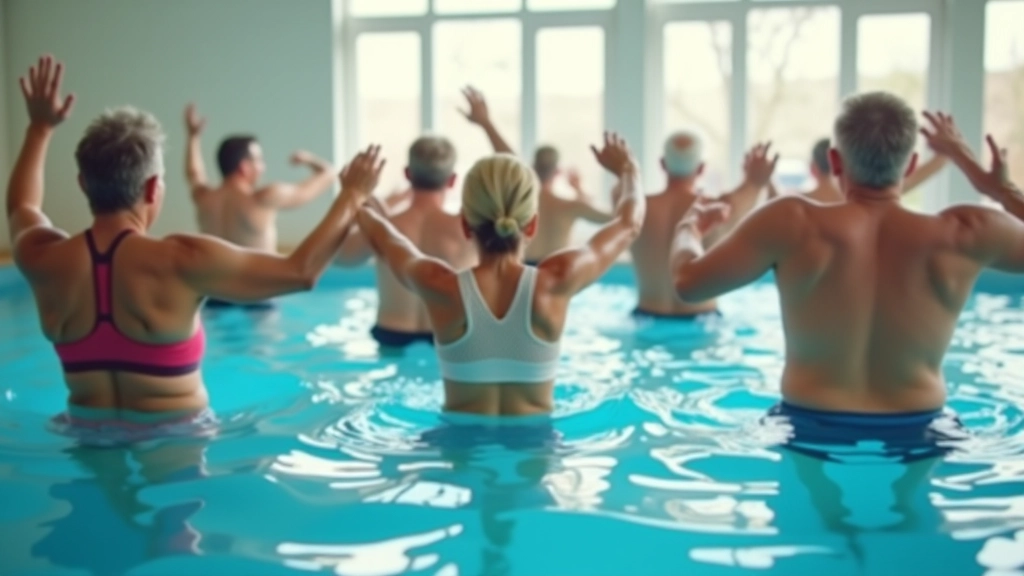
Most water aerobics classes run 45-60 minutes and follow a predictable structure. You'll start with a warm-up in the water—5 minutes of easy walking and gentle movement to get your body acclimated. This isn't boring. Even this warm-up builds heat and mobility.
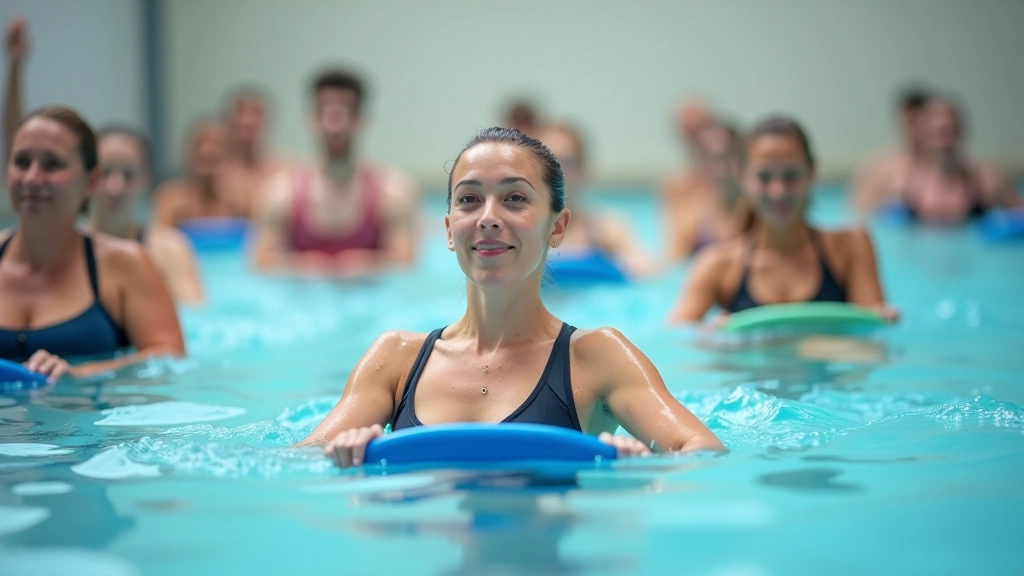
The Main Set: 30-40 minutes of choreographed or circuit-style exercises. You might do water walking with high knees, cross-body movements, flutter kicks with a kickboard, and standing water exercises like lateral raises using water dumbbells. The beauty is you control the intensity—go faster or use more range of motion to work harder, or slow down if you need recovery.
The class finishes with 5-10 minutes of cool-down stretching. Don't skip this part. Water supports your weight while you stretch, so you can achieve deeper, more comfortable stretches than you might on land. You'll feel looser walking out than when you walked in.
A typical class burns 200-300 calories depending on intensity and your body weight. That's serious work without the joint stress of running or high-impact aerobics.
Equipment You'll Use (or Skip)
Water aerobics doesn't require fancy gear. Many pools have everything available, but knowing what exists helps you understand what instructors might incorporate into a class.
- Kickboards: Foam boards you hold to isolate leg work. Simple but effective for building lower-body strength and endurance.
- Water Dumbbells: Lightweight foam weights that provide resistance when you move them through water. They're especially useful for arm and core work.
- Buoyancy Belts: Wear these around your waist to increase buoyancy, letting you focus on upper-body or core work while your legs stay afloat.
- Flotation Noodles: The classic foam tube. You can hold it, sit on it, or use it for different exercises. Surprisingly versatile.
- Hand Paddles: Increase water resistance on your hands and forearms, making arm movements more challenging.
Honestly? You can do an excellent water aerobics workout using nothing but your body and the water. The equipment just adds variety and lets you adjust difficulty without changing speed.

Getting Started Without Overthinking It
Find a Pool Near You
Check your local YMCA, community centers, or public recreation facilities. Most have dedicated water aerobics classes with set schedules. Call ahead and ask about beginner-friendly times—many pools offer morning sessions specifically for this.
Attend One Class
Just show up. Bring a swimsuit and towel. Don't worry about keeping up perfectly or understanding every exercise immediately. You'll pick it up faster than you think, and instructors expect a learning curve.
Work at Your Own Pace
You control intensity. Move slower, take more breaks, skip high-impact moves—whatever your body needs. You'll still get a great workout. The person next to you doing everything fast and the person doing movements at half speed are both getting legitimate exercise.
Build a Routine
Aim for 2-3 sessions per week to see real progress. You'll notice strength improvements within 4-6 weeks, and endurance gains usually show up within 8 weeks. Consistency matters more than intensity.

Who Benefits Most From Water Aerobics
While water aerobics works for almost everyone, certain groups find it especially valuable. If you're over 45 and haven't exercised in years, the low-impact environment lets you build fitness without risking injury. If you've got arthritis, knee problems, or lower-back pain, water is genuinely therapeutic—the exercise helps while the buoyancy protects you.
People recovering from surgery or injury find water aerobics is often recommended by physical therapists because you can maintain cardiovascular fitness while healing. Weight-bearing joints don't get hammered, so you're not undoing recovery work.
Competitive swimmers and triathletes use water aerobics for active recovery days—they get a workout while giving their joints a break from hard training. And honestly, if you're someone who gets bored with gym equipment or doesn't enjoy running, water aerobics offers something genuinely different. The group energy, the music, the instructor's motivation—it all makes showing up easier.
The Bottom Line
Water aerobics isn't a watered-down version of real exercise. It's a legitimate full-body workout that happens to be kind to your joints. You'll build strength, improve endurance, and actually feel energized instead of wiped out. Most importantly, you can show up consistently without pain or injury holding you back.
If you've been looking for a way to stay active that doesn't involve impact, running, or complicated gym routines, the pool is waiting. Find a class, bring a swimsuit, and discover why so many people—especially those in their 40s, 50s, and 60s—have made water aerobics their go-to fitness solution.
Important Disclaimer
This article is educational and informational in nature. It's not medical advice or a substitute for professional guidance. If you have existing health conditions, joint problems, or haven't exercised in a long time, it's wise to consult your doctor before starting any new exercise program, including water aerobics. Your doctor or physical therapist can provide personalized recommendations based on your specific situation. Water aerobics is generally low-impact and safe, but individual circumstances vary. Always start slowly, listen to your body, and work with qualified instructors who can help you with proper form and appropriate modifications.
Related Articles